NOTN- A memo from City Manager Katie Koester says the city could be responsible for 25% of the cost of an accelerated Army Corps of Engineers project, rather than the 10% local share associated with previous proposals.
First reported by the Juneau Independent, Koester writes Juneau could establish a new service area and tax to help pay for ongoing flood protection and the city’s share of a permanent solution to the annual glacial lake outburst floods.
The Assembly Committee of the Whole will meet on Monday to discuss.
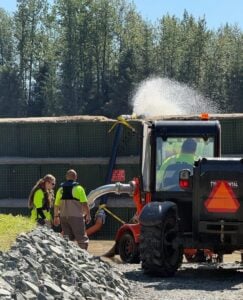
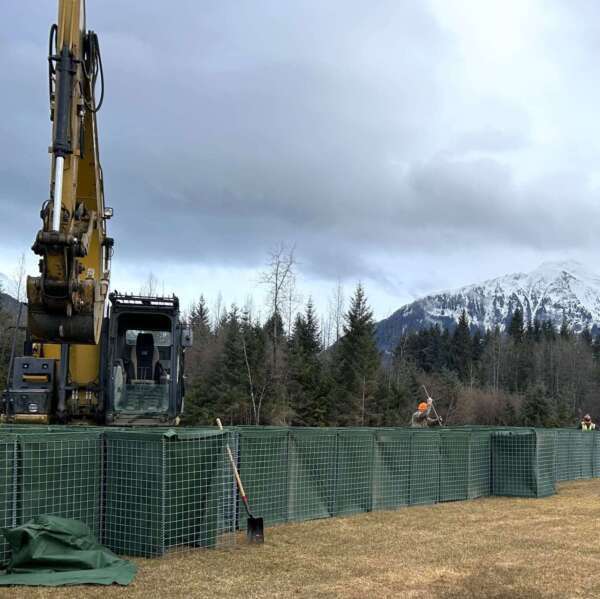
The city has spent millions of dollars on temporary flood protection, including HESCO barriers, while the U.S. Army Corps of Engineers pursues a permanent solution for annual flooding from Suicide Basin.
Koester said the Corps is seeking proposals from industry for an emergency water conveyance prototype capable of permanently addressing the floods. The goal is to keep water levels in Suicide Basin below 1,100 feet so any eventual release would be significantly smaller.
The project is being pursued under the federal Flood Control and Coastal Emergencies authority, which allows for a faster process but requires a 25% local share of construction costs for permanent flood control projects.
The city is working with Alaska’s congressional delegation to change that cost share to 10%, similar to the federal share available for projects involving tribal lands.
The total cost of a permanent project has not yet been determined, but the city expects it to exceed the amount currently available through the federal emergency account. The account receives about $40 million annually for flood control projects nationwide, meaning Juneau will need to advocate for additional federal funding.
Koester recommends the Assembly consider putting a bond or debt proposition before voters once the Corps provides a more reliable estimate of the project’s total cost.
In the meantime, Juneau is continuing to spend money on temporary protections. Nearly $50 million in federal, state and local funding was spent this summer on flood mitigation in the Mendenhall Valley, according to the memo.
Koester said the city expects to remain responsible for regular HESCO maintenance, including inspections, repairs from settling, responding to vandalism and refilling the barriers. The city also must continue coordinating with homeowners, maintaining property access and handling permitting.
She writes the work has also diverted city staff and resources from other projects, according to the memo.
One option under consideration is creating a service area with its own mill rate to fund flood protection and related services. The tax could apply either to properties within the protected area or citywide.
A service area would require approval by voters living within its boundaries. Koester said a citywide property or sales tax could also be appropriate because the annual floods have been characterized as an existential threat to Juneau as a whole, rather than a localized disaster affecting only the Mendenhall Valley.
Koester also recommended that the city push the Alaska Legislature to make construction of a lake emergency water conveyance prototype a state priority during the next legislative session, which begins in January.