By: James Brooks, Alaska Beacon
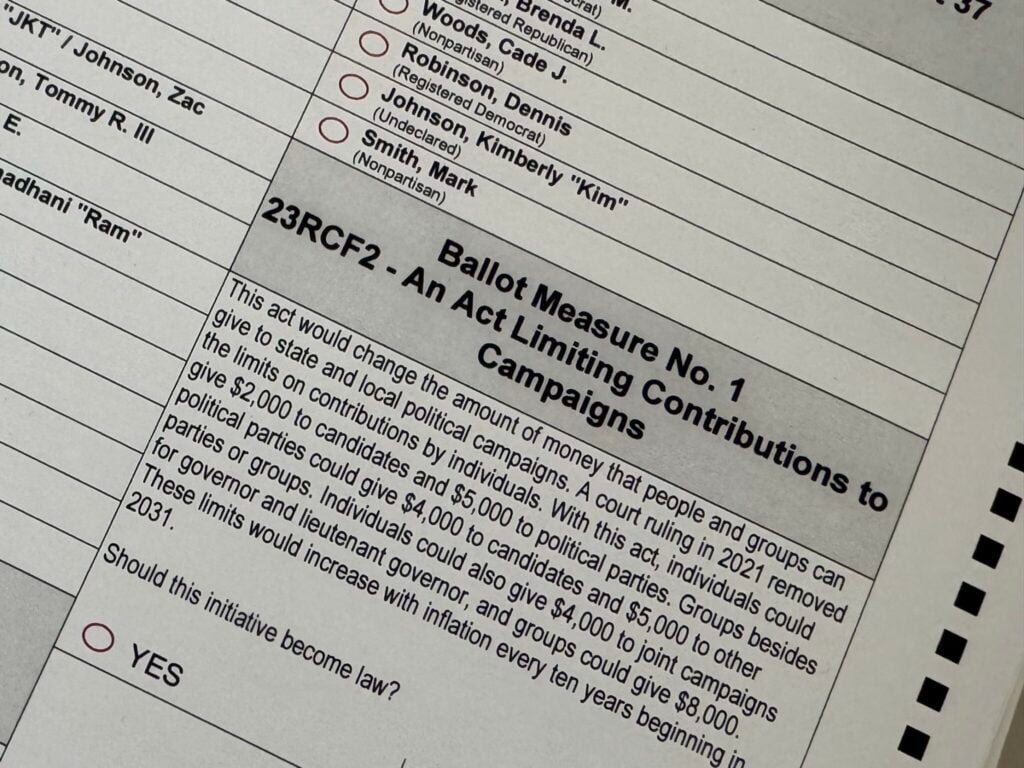
On Aug. 18, Alaskans will be asked if they want to change the way the state’s elections operate, but not in the way that most voters are thinking.
The sole ballot measure before voters in the primary election would reimpose limits on the amount of money that individuals and groups can donate to political candidates in state elections.
A well-funded campaign to repeal the state’s system of open primaries and a ranked choice general election — known as Ballot Measure 2 — won’t be voted on until November.
The measure on the ballot in August would prohibit political donors from giving a candidate more than $2,000 per election. Groups would be allowed to give no more than $4,000 per candidate per election.
Both limits would be adjusted for inflation every 10 years, and they would only apply to state-level elections — for governor, state House and state Senate.
Federal elections, those for President, U.S. Senate and U.S. House, operate under different limits enshrined in federal law.
A low-budget group called Citizens Against Money in Politics gathered tens of thousands of signatures in 2024 to put the newly proposed state limits on the ballot.
In the state’s official election pamphlet, the chairs of the group — former state attorney general Bruce Botelho; Rep. Calvin Schrage, I-Anchorage; dog musher David Monson — state their case, explaining that they view campaign donation limits as “guardrails” on democracy.
“Without these guardrails, wealthy individuals and special interests can have an oversized impact and shift a candidate’s focus away from the constituents they are supposed to serve,” they wrote.
Speaking in a public hearing on Monday, Schrage said, “When a single donor can spend hundreds of thousands or even millions of dollars on a single candidate, it creates a dangerous environment. It not only grants undue influence to the ultra-wealthy, but it also exposes our elected officials to the risk and perception of quid pro quo corruption.”
In the pamphlet, three Republicans, all former legislators, argue against the initiative.
“Campaign contributions are a form of political speech. To limit someone’s ability to support a candidate is to limit their voice in the democratic process,” said former Rep. Ben Carpenter, R-Nikiski; former Sen. David Wilson, R-Wasilla; and former Rep. Liz Vazquez, R-Anchorage.
In addition, imposing limits on outside donations gives an advantage to candidates who are wealthy enough to pay for their own campaigns, they said.
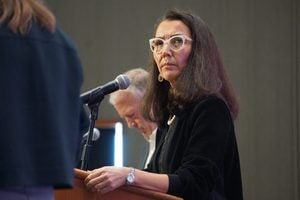
In Monday’s hearing, another Republican, Amy Demboski, spoke in support of their position.
“Reintroducing new caps creates a pay-to-play barrier where only those who already possess significant name recognition can thrive, effectively silencing the grassroots support necessary for insurgent or unconventional candidates,” she said.
The U.S. Supreme Court has previously ruled that it is unconstitutional to limit the amount of money that a candidate may spend on their own campaign.
Ballot Measure 1 also does not limit the amount of money that a third-party group can independently spend to support or oppose a candidate. The U.S. Supreme Court’s 2010 decision, known as Citizens United, allows unlimited amounts of spending by groups that don’t coordinate directly with candidates.
Also this year, the Supreme Court ruled that political parties may spend unlimited amounts of money in coordination with federal candidates. That decision may affect state races in the future.
Ballot Measure 1 is the consequence of a lengthy and successful legal challenge by a group of Republicans inside and outside the state.
Until 2021, Alaska had some of America’s lowest limits on financial donations to candidates — $500 per candidate, per year. Those were installed by a 2006 ballot measure that passed with the support of 73% of participating voters.
But a group of Republicans challenged the legality of those limits in 2015, arguing that they unduly restricted free speech. The case was appealed and remanded multiple times before a three-judge panel of the 9th U.S. Circuit Court of Appeals struck down the limits in July 2021.
Gov. Mike Dunleavy declined to appeal the issue further, and the limits were removed ahead of Dunleavy’s successful re-election campaign the following year.
In 2022 and 2024, state lawmakers attempted but failed to pass a bill reimposing limits. Legislators this year passed a bill identical to Ballot Measure 1, but Gov. Mike Dunleavy vetoed that bill.
In his veto statement, the governor said the new limits “would radically tilt in the favor of the wealthy when it comes to elected office.”
The lack of limits has had its biggest effect on Alaska’s races for governor. In 2022, all three leading candidates — Dunleavy, independent Bill Walker and Democratic candidate Les Gara — recorded large contributions from individual donors.
In this year’s race, the two leading Democratic candidates — Jonathan Kreiss-Tomkins and Tom Begich — have received large donations from out-of-state contributors. Both Democrats say they support passage of Ballot Measure 1.
Most of the other 15 candidates in the governor race, including most of the Republicans, have taken similarly large donations, but not to the extent that the leading Democrats have.
The Republican candidate who has raised the most money, podiatrist Matt Heilala, has spent more than $1.25 million on his own campaign. Click Bishop, a Republican who has raised a middling amount of money, is also being boosted by a large union-funded third-party group. Those latter types of spending would not be affected by Ballot Measure 1.