By: James Brooks, Alaska Beacon
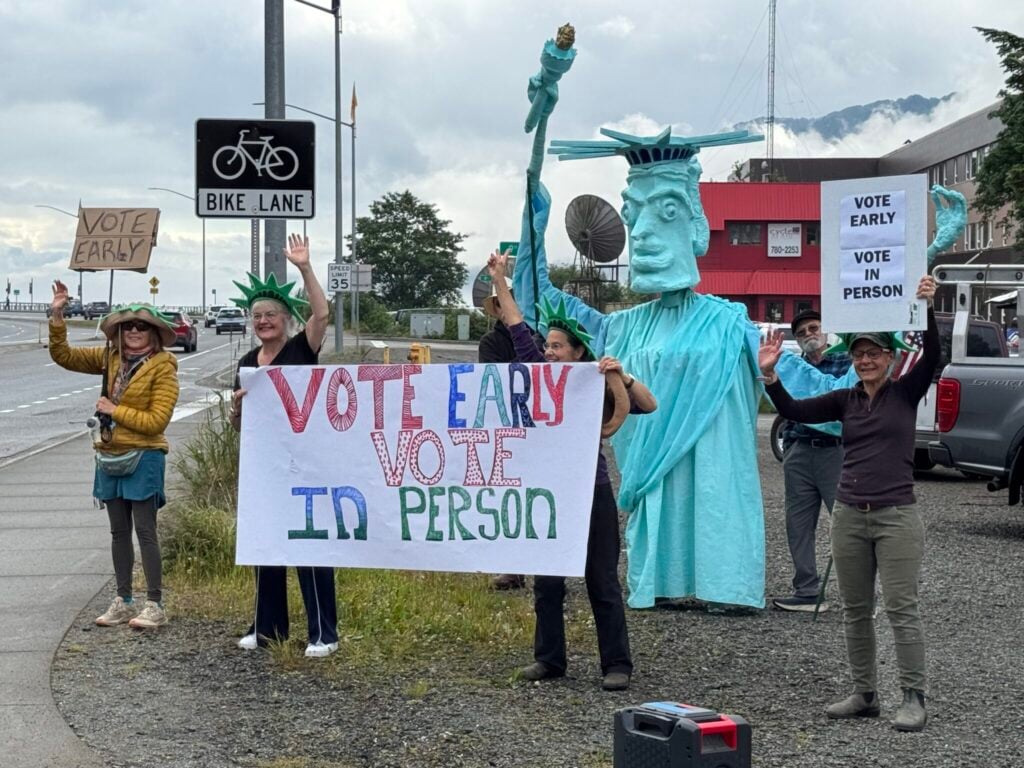
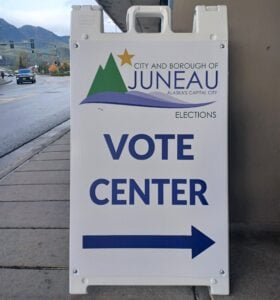
Early in-person voting began Monday at 10 locations in the Railbelt, Juneau and Nome for Alaska’s Aug. 18 statewide primary election. As of July 31, just under 10,000 voters had requested absentee ballots for the election, and hundreds of absentee voters had already mailed in their votes, according to figures from the Alaska Division of Elections.
What’s at stake?
This election decides the four U.S. House, U.S. Senate and governor candidates who will be in the November general election. It also decides whether Alaska will limit the amount of money that political donors can give directly to candidates.
Because the top four candidates for an office advance to the November general election — and because most of the 50 state legislative races have four or fewer candidates — the primary doesn’t mean as much for most legislative races individually.
But because the difference between a Republican-led state House and Senate and a predominantly Democratic coalition-led state House and Senate may come down to a few votes, the handful of contested legislative elections may be important.2026 Voter Guide
The candidates, the ballot measures, and the tools you need to cast your vote.
Watch Eagle River, where incumbent Republican Rep. Jamie Allard is facing four challengers, or the eastern Mat-Su, where Dunleavy-appointed Republican Rep. Garret Nelson has five opponents. In the western Mat-Su, Republican Rep. Kevin McCabe has four challengers.
In the Senate, watch southwest Alaska, where Sen. Lyman Hoffman, D-Bethel, has retired and seven candidates — including current Speaker of the House Bryce Edgmon, I-Dillingham — are running for the open seat.
Seven people are running for the state House seat that Edgmon is leaving open.
What’s the difference between absentee voting and early voting?
The difference is when your ID is verified. At an early voting location, a poll worker looks up your voter registration at a computer to verify that you’re registered to vote in a specific district, then hands you a ballot from that district.
You’ll want to bring a driver’s license, tribal ID or something else to verify your identity. Even a piece of mail with your current name and address will work. If the poll worker knows you, they can also verify your identity without ID.
When you vote absentee, you get a ballot for a district, then seal it inside an envelope and fill out the cover of that envelope with identity information.
Starting Aug. 11, review boards will begin checking the information on those envelopes to verify that those absentee ballots came from registered voters. The ballots within those envelopes will be counted once the polls close Aug. 18.
Absentee ballots can be mailed to the Division of Elections, or they can be cast in person at dozens of places across the state. While there’s only 11 early voting places in Alaska, there are many, many more places to cast in-person absentee votes, including at most city clerks offices.
Which method is best?
Mailed absentee ballots will be counted as long as they’re postmarked on or before election day and reach the Division of Elections no later than Aug. 28.
In Alaska, not all mail is postmarked on the day it is mailed, so be sure to mail your ballot a few days early.
If you’re worried about mail delays, take your absentee ballot to one of the locations listed here before election day, or do early voting in person.
You can also fax a completed absentee ballot to the Division of Elections. If you don’t have a fax machine, you can use a scan-to-fax app on your cellphone instead.
Early voting ensures your vote gets counted, since your ID is verified up front, your ballot is already scanned and ready to be counted, and there’s a paper copy for any recounts and reviews.
The drawback is that it’s only offered in 10 places within the state, and if you’re traveling Outside or not close to one of those 10 places, it’s not available.
What does the ballot look like?
Your ballot will have two sides. On the front side are the U.S. House and U.S. Senate races. On the back side are the governor, state House and state Senate races. There’s also an option for Ballot Measure 1.
Pick one candidate for each race. Ranked-choice voting, when you’ll rank up to four candidates, is in November.
Use a blue or black pen to fill in the oval. Don’t use a permanent marker.
When will results be available?
The first unofficial results will be posted online about 9 p.m. on Aug. 18. Full election day totals may take a few days to arrive as rural precincts report their results. Absentee ballots will be counted day by day, with new totals expected Aug. 25 and then on Aug. 28, when the last unofficial results will be posted.
Aug. 31 is when the division expects to certify the final results. That’s also the date for any top-four candidates to withdraw, something that has happened in prior years for strategic reasons.
Lower-finishing Republicans, in particular, have been willing to drop out of the top four to ensure that only one Republican appears on the November ballot.